Equipment Guide
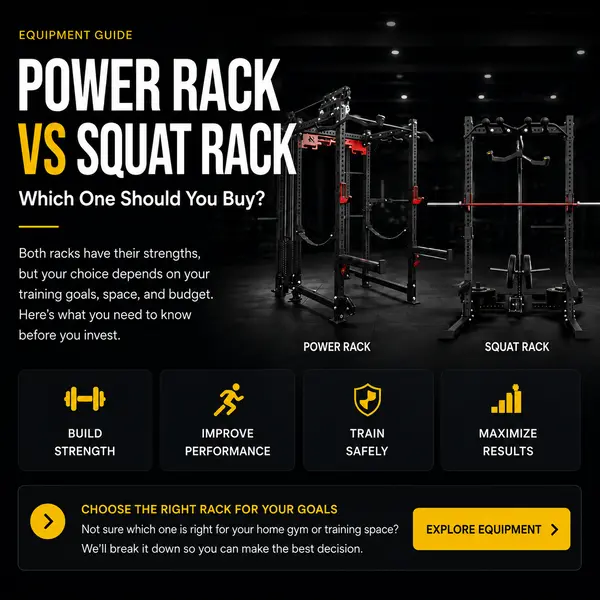
Power Rack vs Squat Rack
Which One Should You Buy?
Both racks support serious strength training, but they solve different problems. This guide compares safety, versatility, space, budget, and long-term use so you can choose the right setup for your gym.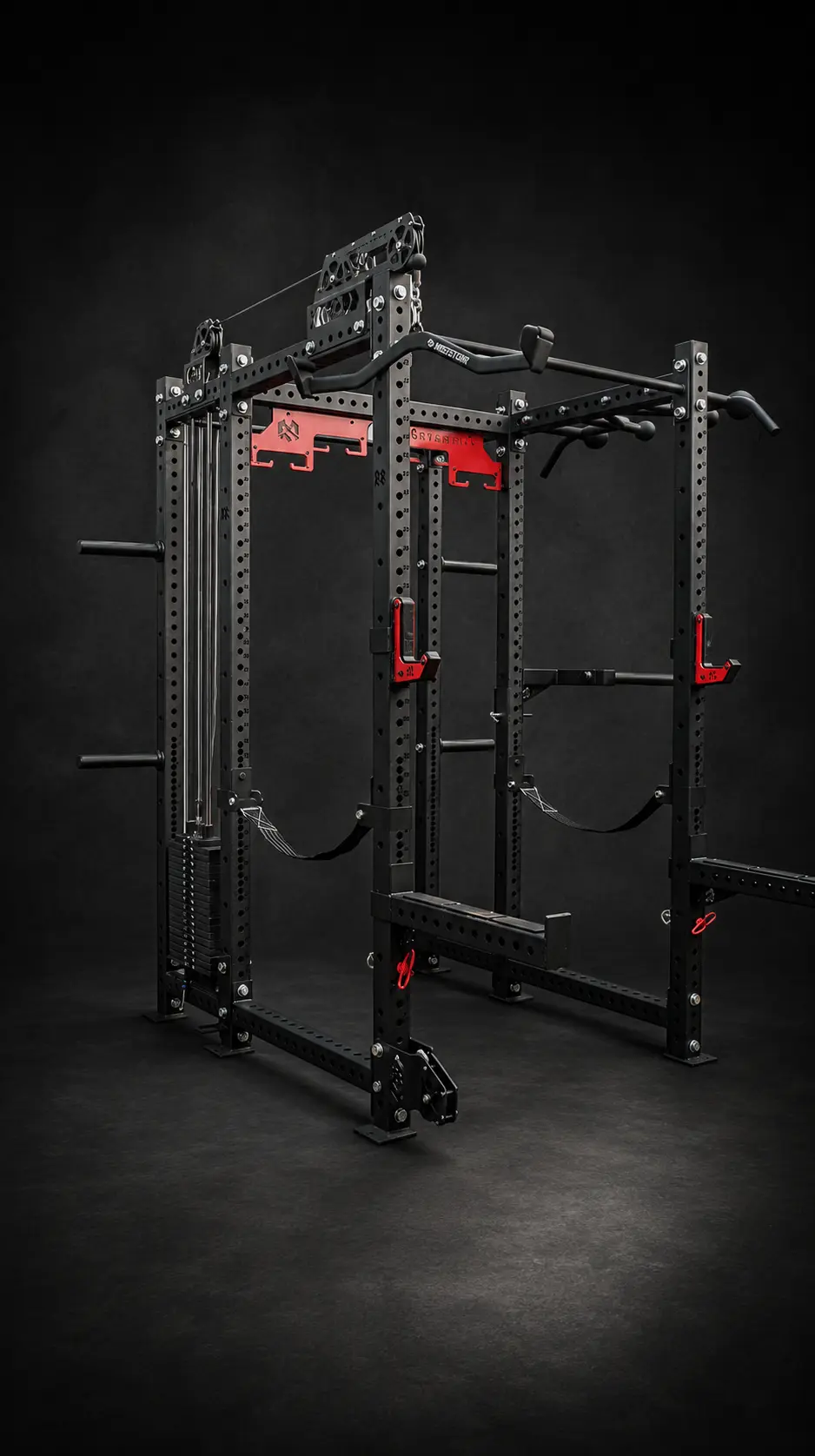
VS
Quick Verdict
The right rack depends on what matters most.
Maximum safety and long-term versatility.
- More protection for heavy lifting
- More attachment compatibility
- More exercise options
- A stronger long-term training platform
A simpler setup with better space efficiency.
- Lower initial investment
- Smaller footprint
- Focused barbell training
- An easier entry into home gym training
At a Glance
A power rack is usually the more complete training station. A squat rack is generally simpler, more compact, and more affordable.
The biggest differences in four points.
Safety
Power Rack Four uprights and internal safeties provide better protection for heavy training.Versatility
Power Rack More attachment options and more room for full-body training.Space
Squat Rack A more compact footprint for smaller training areas.Price
Squat Rack Usually the more affordable starting point for a home gym.
What Is the Difference?
Full enclosure versus open training access.
Power Rack
A complete strength-training station.
A power rack uses four uprights to create a full training cage. The enclosed structure allows safety straps or safety bars to protect the lifter during squats, bench presses, and other heavy barbell movements.- Four-upright structure
- Internal safety system
- Multiple attachment positions
- Suitable for advanced and commercial use
Squat Rack
A focused and space-efficient lifting setup.
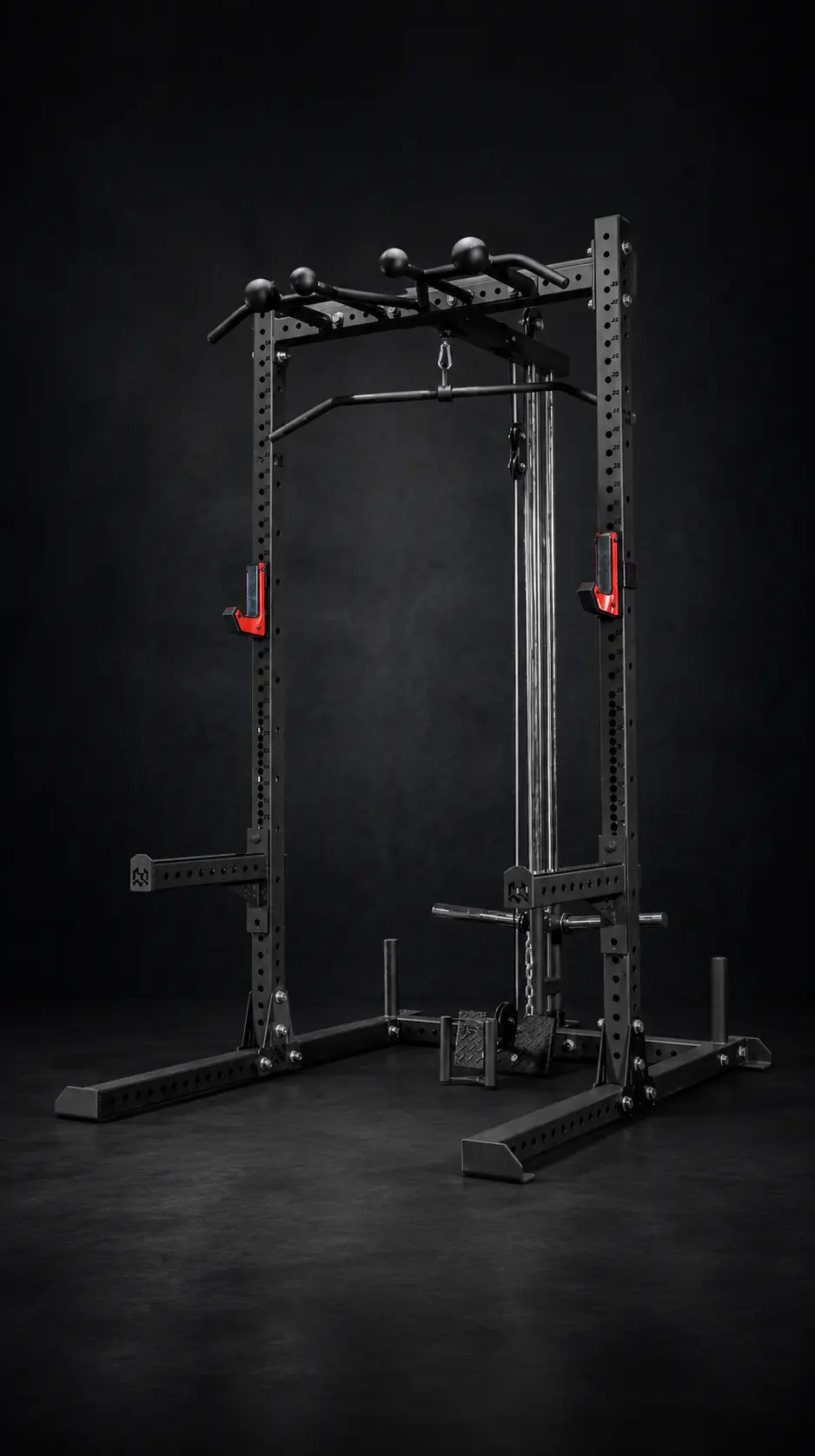
A squat rack normally uses two primary uprights. It supports squats, presses, pull-ups, and selected accessory work while keeping the training area more open.- Open two-upright structure
- Smaller training footprint
- Simple barbell-focused setup
- Ideal for beginners and compact home gyms
Detailed Comparison
Use this table to identify which rack fits your training style, available space, and future plans.
Compare the features side by side.
| Feature | Power Rack | Squat Rack |
|---|---|---|
| Structure | Four-upright full cage | Open two-upright design |
| Safety | Maximum protection with internal safeties | Good protection with correctly positioned safety arms |
| Versatility | Excellent attachment and exercise compatibility | Focused on essential barbell movements |
| Space | Larger footprint | More compact |
| Budget | Higher initial investment | Lower entry cost |
| Best Use | Home gyms, private studios, and commercial facilities | Compact home gyms and focused lifting setups |
Which One Is Right for You?
Choose according to your real priorities.
Buy a Power Rack if:
- You train heavy without a regular spotter
- You want maximum exercise variety
- You plan to add attachments later
- You have enough floor and ceiling space
- You want one long-term training platform
Buy a Squat Rack if:
- Your main focus is squats and barbell work
- Your training area is limited
- You want a simpler setup
- You have a smaller starting budget
- You prefer an open lifting area
Things to Consider
Choose for the gym you are building next.
Avoid choosing only by price or appearance. The best rack should fit the room, the athlete, and the training plan.Training goals
Strength, power, general fitness, sports performance, or commercial use?Available space
Measure floor space, ceiling height, barbell clearance, and bench position.Budget
Include the rack, safeties, attachments, flooring, bench, and delivery cost.Future expansion
Consider cable systems, storage, dip attachments, pull-up options, and accessories.
Final Verdict
View All Racks
Build stronger. Train smarter.
Choose a power rack for safety, versatility, and long-term expansion. Choose a squat rack for simplicity, space efficiency, and a lower starting investment.
FAQ