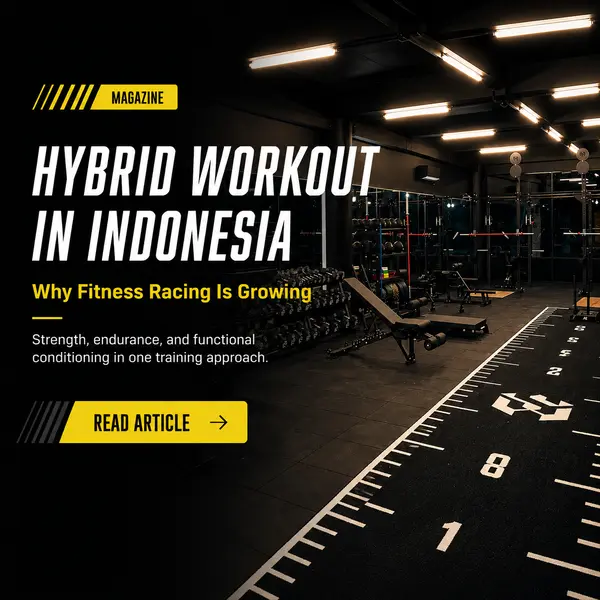
Hybrid Training in Indonesia
Strength Meets Endurance.
Hybrid workouts combine running, strength training, functional movement, and conditioning in one performance-focused system.
Editorial noticeThis article discusses hybrid training and fitness racing for informational purposes. HYROX® and other third-party marks belong to their respective owners. Movestorm is not affiliated with, sponsored by, or endorsed by HYROX.
The new fitness culture
Hybrid training gives gym work a broader purpose. Athletes learn to preserve technique, pacing, and power even when fatigue begins to affect movement quality.
Strength and endurance are no longer separate goals.
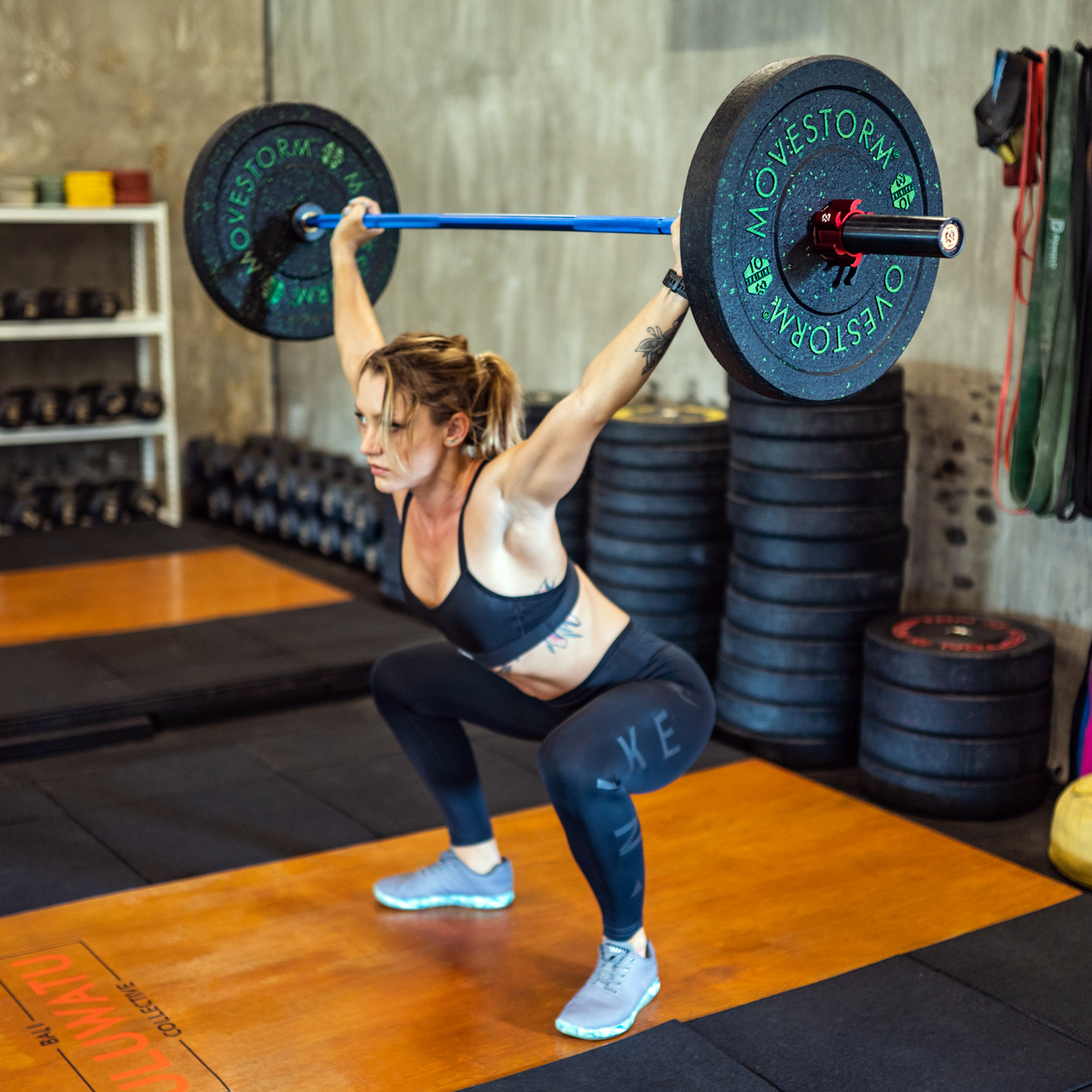
Why it works
Easy to understand. Difficult to master.
The appeal of hybrid fitness comes from its simplicity. The movements are familiar, but athletes must manage breathing, force production, transitions, and pacing while fatigue continues to build. Running, sled work, rowing, loaded carries, lunges, and wall balls become significantly harder when performed in sequence.01Accessible movement patterns
02Measurable performance
03Clear progression targets
Race structure
One popular international format combines repeated running intervals with eight functional workout stations. The sequence below is presented as an editorial example.
A full-body format built around repeated effort.
Ski Erg
Upper-body rhythm, aerobic output, and controlled pulling mechanics.Sled Push
Leg drive, body position, and sustained force production.Sled Pull
Grip, back strength, coordination, and efficient rope handling.Burpee Broad Jump
Total-body conditioning with repeated ground contact and forward movement.Rowing
Pacing, technical efficiency, and controlled energy expenditure.Farmer's Carry
Grip strength, posture, core stability, and walking efficiency.Sandbag Lunges
Lower-body endurance and positional control under fatigue.Wall Balls
Squat consistency, throwing accuracy, breathing, and resilience.
Growing momentum
The format gives recreational athletes a clear target, encourages community training, and makes progress easy to measure.
Why fitness racing keeps attracting new athletes.
A clear objective
Training becomes easier to structure when athletes have a date, format, and measurable outcome.Community energy
Group training, shared preparation, and event-day atmosphere increase motivation and consistency.Balanced athleticism
Athletes do not need to choose between being strong and being conditioned.
Training framework
Build capacity without turning every session into a race.
Effective hybrid training separates technical development, strength work, aerobic conditioning, and race-specific sessions.MONLower-body strengthSquat, hinge, sled technique
TUEEasy aerobic workLow-intensity running or machine conditioning
WEDUpper-body strengthPressing, pulling, grip, and trunk work
THUIntervalsControlled running or machine-based intervals
SATHybrid sessionSelected stations with planned pacing
SUNRecoveryRest, mobility, or light movement
Training equipment
The right setup should support strength development, conditioning, loaded movement, and efficient transitions.
Build a practical hybrid training zone.
ConditioningStormSkier
Strength enduranceCompetition Sled
RunningStormRunner
Functional trainingWall Ball Target
Train with purpose
Explore Functional Training
Prepare your space for strength, endurance, and conditioning.
Frequently asked questions